Fifteen years ago, Kyle Isacksen and his wife, Katy Chandler, lived in what most people in their home city of Reno, Nevada, would think of as a normal house. It was 1,200 square feet of drywall and two-by-fours in a neighborhood of skinny trees and other young families driving back and forth to work.
It felt, to the two of them, like a completely ridiculous arrangement.
Their lives, they sensed, lacked a connectedness – to the community, to the earth, to the high desert ecosystem in which they existed. They had just had their first child, and they couldn’t stop thinking that there was a way to live with more integrity.
Fifteen years ago, Kyle Isacksen and his wife, Katy Chandler, lived in what most people in their home city of Reno, Nevada, would think of as a normal house. It was 1,200 square feet of drywall and two-by-fours in a neighborhood of skinny trees and other young families driving back and forth to work.
It felt, to the two of them, like a completely ridiculous arrangement.
Their lives, they sensed, lacked a connectedness – to the community, to the earth, to the high desert ecosystem in which they existed. They had just had their first child, and they couldn’t stop thinking that there was a way to live with more integrity.
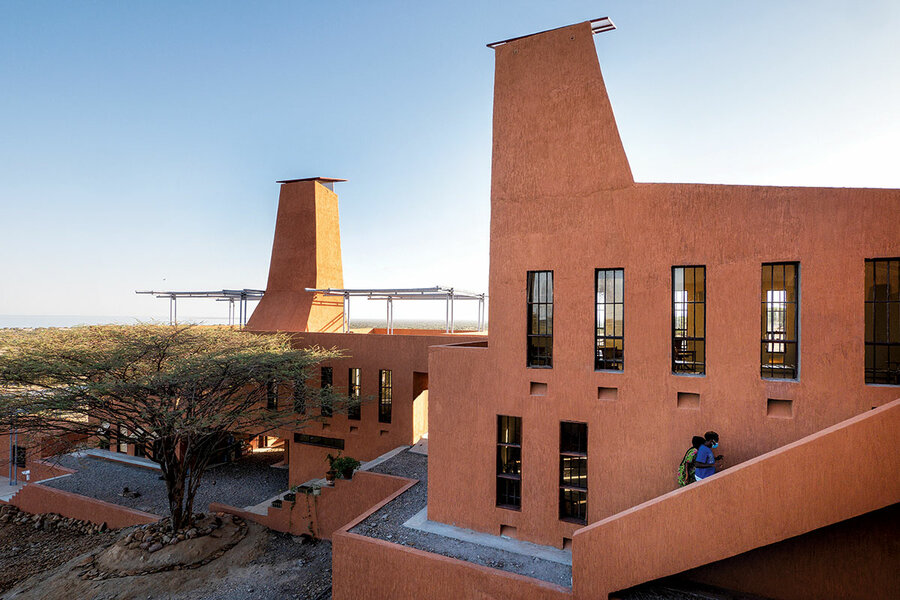 Inspired by termite mounds, ventilation towers at the Startup Lions Campus in Turkana, Kenya, pull hot air up as fresh air comes in via lower-level openings.
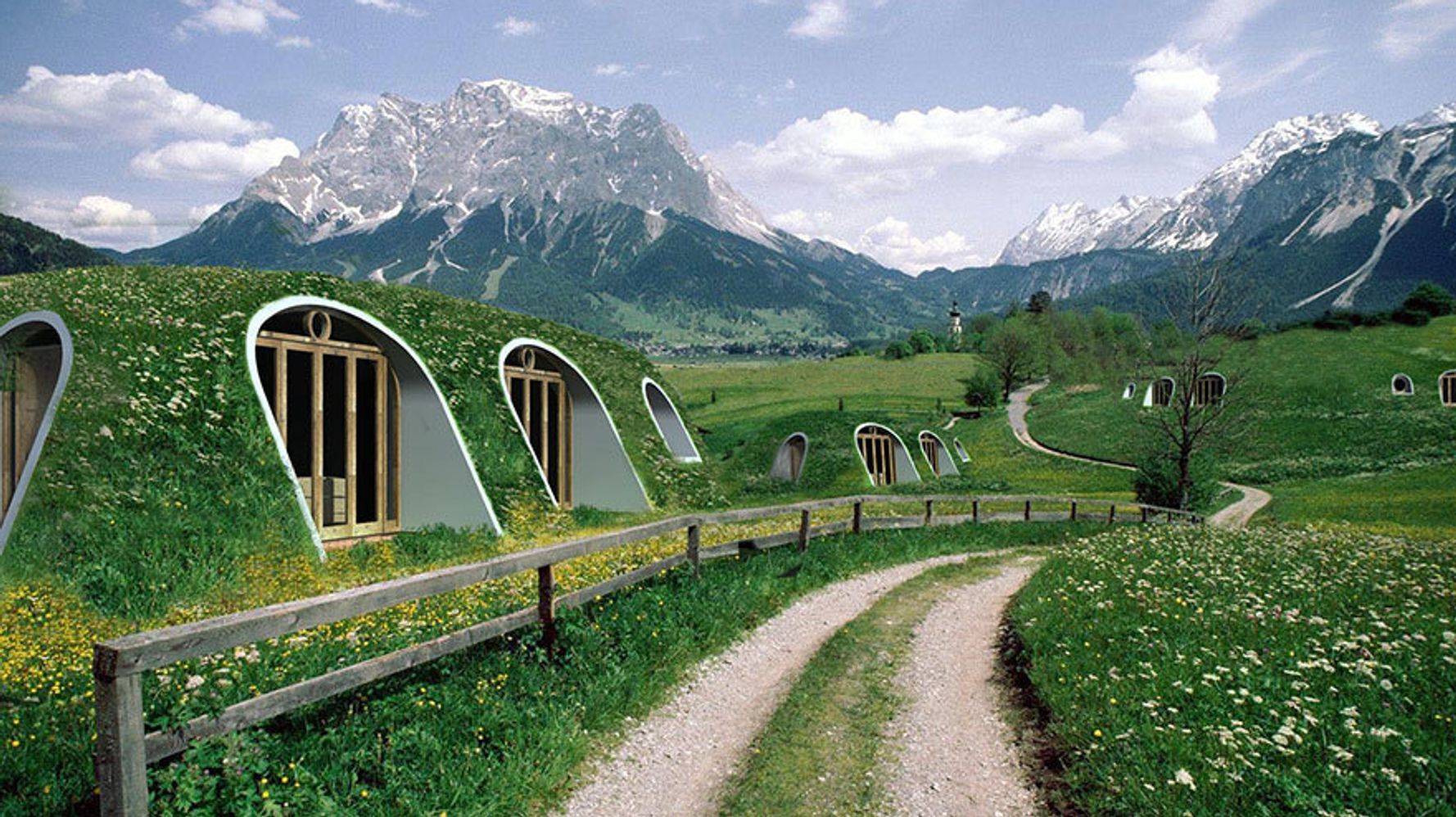 Undisclosed location, Alps.
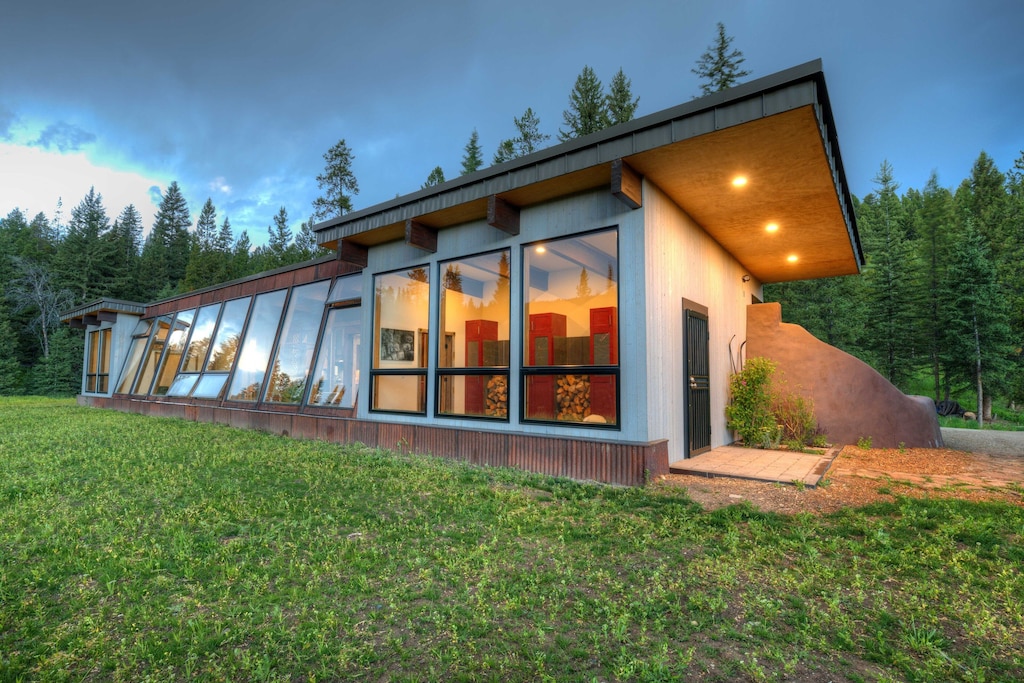 Earth Ship VRBO home in Big Sky, Montana.
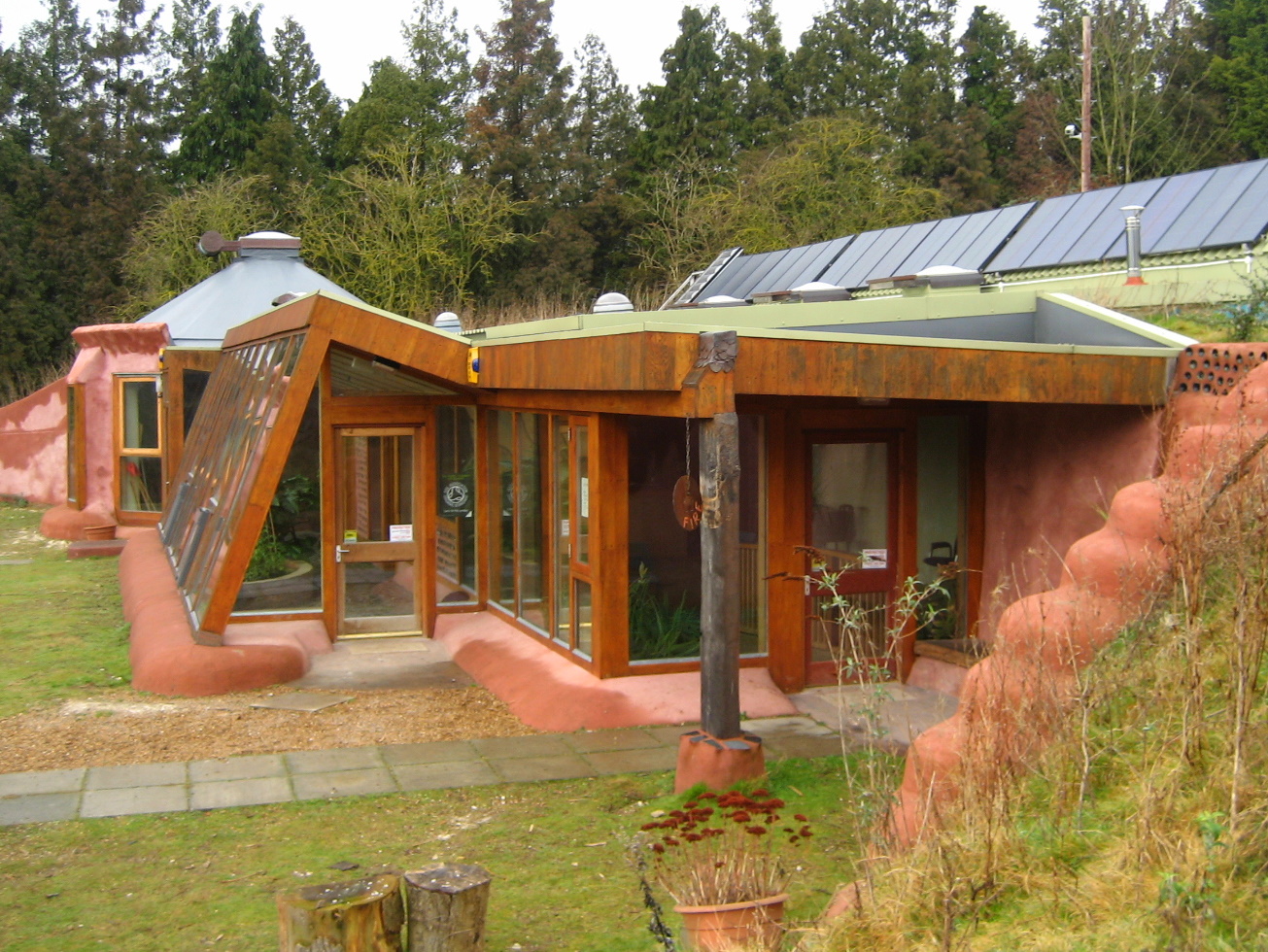 Earthship Brighton is a sustainable dwelling located in Stanmer Park, Brighton UK.
“At that point, a lot of the talk was about carbon footprint,” Mr. Isacksen recalls. “But we just knew things felt off. We felt we were part of the problem, being caught up in our little rat race. We started trying to figure out how to live within our values.”
Their first move was from that 1200-square-foot tract home to a 200-square-foot straw bale cabin in a co-housing community across town. Then they went to Oregon, to apprentice with Conrad Rogue, who was at the forefront of what’s known as the natural building movement – a shift toward using Indigenous building practices and natural materials, particularly clay, to create homes and other structures.
What they learned there struck a nerve.
There is an integrity to building with the earth that exists, literally, at one’s doorstep, Mr. Isacksen says. Clay-based structures are also comfortable, he says, keeping far cooler in hot weather than more modern buildings, and using a fraction of the energy. And while Indigenous communities have used earthen techniques for centuries, the heat-adjusting properties of adobe and other sorts of mud-brick buildings have taken on new importance with climate change.
This summer, heat waves swept across the Northern Hemisphere, bringing record temperatures from Texas to England to Pakistan. The years 2013 to 2021 rank among the 10 warmest on record, with scientists expecting that trend to continue. In response, there has been an increased focus by entrepreneurs and policymakers on technological innovations to help humans stay cool – everything from higher-efficiency air conditioning to superwhite reflective paint to nanoparticle window films. But a growing number of architects, builders, and homeowners, from northern Africa to northern Europe, are focusing on a different approach: a return to bygone building practices that were highly attuned to place and kept spaces cool before air conditioning.
Buildings with integrity of place
“Buildings started changing at the beginning of the last century because of cheap electricity and cheap heating and cheap cooling,” says Iain Campbell, senior fellow at RMI, an energy research organization. “Before then, people would design buildings based upon climate. So if you went to, say, a building in the Middle East, it would not look like a building that is in downtown Toronto. … I understand why people are going back and saying that we need to use these natural materials. It’s the philosophy that we should be designing buildings for the climate zones they are sitting in.”
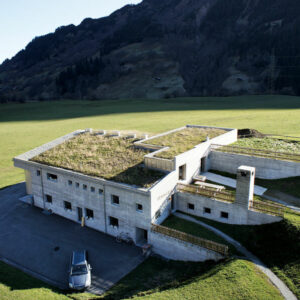
The movement is global. In Basel, Switzerland, builders are increasingly installing “green roofs” of earth and plants, a throwback to old Scandinavian sod homes. In Medellín, Colombia, policymakers have restored natural topography and greenery to their city, lowering the overall temperature dramatically. And in Dakar, Senegal, prizewinning Burkinabé architect Francis Kéré is designing with Indigenous bricks. A Kéré-designed school in Turkana, Kenya, features ventilation towers inspired by nearby termite mounds.
“The key word is ‘localized’ – localized with the country, with the climate, with local materials,” says Nicolas Rondet, the French architect who co-founded Worofila, a Dakar-based architectural firm that collaborates with Mr. Kéré and is behind many other new earthen brick structures in Senegal………