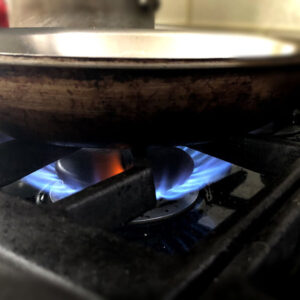
Natural gas emissions contributing to the problem of global warming are small compared with emissions from the largest polluters – transportation and electricity production. But dozens of cities from New York to San Francisco are banning gas hookups in new construction in an effort to get to zero emissions from future buildings.
Some of the noisiest reactions seem to be from those passionate about cooking with gas. Their culinary angst – along with reaction from advocates of fuel choice – has sparked a blowback of bans on the bans. Some localities and 19 states have passed laws to prevent restrictions on new natural gas connections.
“With all the progress that we’ve made over the last 10 years or so in terms of changes to the electrical grid with the shift away from coal, it’s now becoming the case that the next sector that should be the obvious target of policies to reduce emissions” is natural gas, says Jonathan Buonocore, research scientist at Harvard University’s T.H. Chan School of Public Health.
Nora Singley, a professional food stylist, downplays the concern. Even though she prefers the control of heat that gas gives her in the kitchen, “it would just be a period of acclimating,” because there are good gas-free electric ranges.
Humans have been cooking with fire for millennia. But, with concerns over greenhouse gas emissions rising, some cities are banning natural gas in the kitchens of the future, and creating a policy dilemma: Can we slow global warming and still eat well?
Dozens of jurisdictions from Brookline, Massachusetts, to San Francisco have moved to ban new gas hookups for heating and cooking, and New York City last month brought its heft to the trend, setting restrictions on fossil fuel usage in new buildings by phasing in emissions limits beginning next year.
Culinary angst over the bans among those who find flame cooking superior has sparked a blowback of bans on the bans. Some localities and at least 19 states have passed laws to prevent municipalities from restricting new natural gas connections. Also behind these actions: gas-industry lobbying for “energy choice” and broader legislative tussling along party lines.
“With all the progress that we’ve made over the last 10 years or so in terms of changes to the electrical grid with the shift away from coal, it’s now becoming the case that the next sector that should be the obvious target of policies to reduce emissions has changed,” says Jonathan Buonocore, research scientist at Harvard University’s T.H. Chan School of Public Health. Natural gas is now a key target, he says.
Pollution and safety concerns
Methane, released from natural gas systems, accounts for about 3% of all U.S. greenhouse gas emissions, a pollutant that contributes to climate change, according to the U.S. Environmental Protection Agency. Concerns also exist about natural gas as an indoor air pollution source.
A clean energy advocacy group, RMI, estimates that by 2040, the New York City bill could eliminate the equivalent amount of a year’s worth of emissions from 450,000 cars.
While the natural gas contribution to the emissions problem may seem small compared with emissions for transportation (the largest contributor), those places instituting gas hookup bans are only banning use of gas in new construction. In California, for example, 26 jurisdictions have passed laws to require “all-electric” construction, including Berkeley, Oakland, and San Francisco, though some exceptions to “all-electric” exist for commercial cooking.
“You build a new building and it’s there for 50, maybe 100 years,” says Mark Specht, a senior energy analyst at the Union of Concerned Scientists. The idea behind the NYC ban and similar bans in California is simple, he adds. “If you put in the infrastructure for gas hookups, then you run the risk of locking in continued gas use for decades and decades down the road.”
Restaurant chefs mount some of the strongest objections to the gas bans, even though they will still be able to use gas in buildings where hookups already exist. ……….