Congress passed measure despite misgivings about interfering in labor talks.
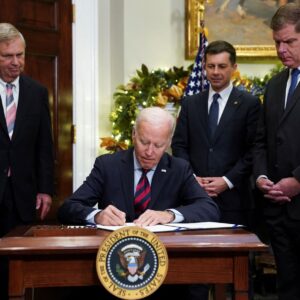
WASHINGTON—President Biden on Friday signed legislation to prevent a nationwide strike by railroad workers, the last step in resolving a long-running dispute between workers and major freight railroads.
With his signature, Mr. Biden ordered unions to implement a labor contract mediated by his administration that four unions representing more than half of unionized rail workers had rejected after the deal was struck in September. The agreement doesn’t include an expansion of paid sick leave benefits sought by unions and some lawmakers. It marks the first such intervention in a railroad labor dispute in three decades.
The signing comes after both Senate and House lawmakers passed the legislation this week.
Under the Railway Labor Act, Congress can make both sides accept an agreement to prevent harm to the U.S. economy. Once the labor agreement imposed by Congress is in place, rail workers aren’t allowed to strike.
Mr. Biden as well as Republican and Democratic lawmakers said that they didn’t like getting in the middle of the dispute but that they couldn’t risk a strike.
“I know this was a tough vote for members of both parties,” Mr. Biden said Friday before signing the bill. “It was tough for me, but it was the right thing to do at the moment to save jobs, to protect millions of working families from harm and disruption and to keep supply chains stable around the holidays.”
Lawmakers broadly agreed that unions should accept the earlier deal, though a second measure to provide seven additional paid sick days drew support from an unlikely union of both progressive Democrats and far-right conservatives. The measure ultimately failed to get enough votes in the Senate.
Unions had criticized Mr. Biden’s call for Congress to intervene, saying it undercut their bargaining position and would force some workers to accept a labor deal some had rejected. Some also said that the failure by the Senate to back a paid-leave provision showed that lawmakers were giving priority to corporate interests over workers.
SMART-Transportation Division, which represents around 36,000 rail workers, thanked lawmakers and the Biden administration for helping workers negotiate on the contract, but said it was disappointed with the failure of the paid-leave measure in Congress. Some senators “voted to prioritize the corporate greed of rail carriers and CEOs over the needs and quality-of-life improvements that our members so desperately deserve,” the union said.
Ian Jefferies, president and chief executive of the Association of American Railroads trade group, said the new labor deal “is a compromise by nature, but the result is one of substantial gains for rail employees.”
Business leaders—spanning energy companies to fertilizer producers—had sounded alarm bells over the possibility of a railroad strike, warning that a work stoppage or a lockout at the railroads could put hundreds of thousands out of work and exacerbate supply-chain problems and inflationary pressure.
Freight railroads and unions representing engineers, conductors, machinists and other workers have been in labor negotiations for more than two years. The White House appointed a mediation panel over the summer. Eight unions ratified a proposed contract that came out of those talks, while four didn’t. The main sticking points involved work schedules and paid sick time.
The five-year agreement, which replaces a contract that covers the period from 2015 to 2019, offers railroad workers a 24% increase in wages from 2020 through 2024….