Burlington, Vt., is a bike-friendly city. There are multiple bike stores, a network of bright green bike lanes on many major streets and a waterfront bike path with views of the dazzling sunsets over Lake Champlain and the Adirondack Mountains.
Burlington’s bike culture and natural beauty convinced Julie Williams to settle there after graduating from the University of Vermont 10 years ago. She also liked the city’s progressive politics, which started the career of Bernie Sanders, a former Burlington mayor. “I feel like I fit in here,” said Ms. Williams, who operates Betty’s Bikes, which she named after her grandmother.
But this spring, she noticed a troubling trend: A large number of people were calling the store asking whether Ms. Williams had seen their missing bicycles. “I was getting five or six calls a day,” she said.
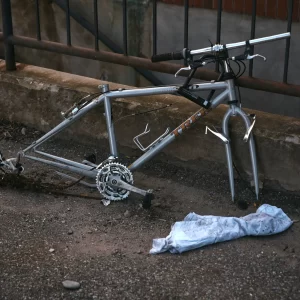
Bike theft has long been a problem in Burlington, a city of about 45,000 residents, but it seemed to intensify over the summer and into the fall. Bikes were disappearing from front porches, garages and bike racks. Mountain bikes, carbon-fiber race bikes, children’s bikes — all gone. The university warned students returning to campus that about 220 bikes, valued at $267,000, had been stolen in and around the city since June.
Frustrated by the thefts, Ms. Williams became part of a Facebook group, through which people could post photos of their stolen bikes in hopes that others might see them around town and return them.
The group, “BVT Stolen Bike Report and Recovery,” soon attracted more than 2,000 members — equal to about 4 percent of the city’s population. Many shared similar-sounding stories of loss.
“Back to school is off to a great start, except my daughter’s bike went missing,” one local mom wrote on the group’s page.
Feeling that the local police were too busy to fully investigate many of the thefts, members of the Facebook group started going on patrols around the city looking for the stolen property. Often, the bikes were easy to find. They had been tossed in the wooded area along the bike path or ditched in a downtown park. Or they were being ridden casually by people who did not own them.
But, as summer wore on, the recovery effort became more than just an exercise in good citizenship. Like small businesses dealing with belligerent customers, or retailers locking up detergent, makeup and other items popular with shoplifters, the bike recovery group has found itself on the front lines of a debate about crime and policing that is confounding many American cities.
In the effort to try to solve the crime of bike theft themselves, the group’s members have come close to a world of violence and despair that lurks barely below the surface of this beautiful place and, at times, bursts into the open. In some years, Burlington has gone without a single gunfire incident, according to the police. But in 2022 there have been 25 such incidents, including four murders — the most in at least 30 years, the police say.
“It has been traumatizing,” said Ms. Williams, “to watch the city kind of fall apart before your eyes.”
A clash of ideals and reality
Downtown Burlington is a vibrant cluster of bars humming with live music, cafes hissing with sounds of steamed-milk machines and a Patagonia store with a “Black Lives Matter” sign in the window.
At the heart of the scene is City Hall Park, which two years ago was outfitted with new benches, ornamental grasses and a fountain illuminated with pastel-colored lights.
The park is dedicated to the people of Burlington who have died from Covid-19. It reflects the city’s generous investments in civic spaces and the earnestness of its politics.
“In the years to come,” a plaque in the park reads, “as children play in jets of water and crowds assemble to enjoy each other and our city’s great music, food, and events, let us never forget that these joyous scenes are fragile.”
Such joy, the plaque goes on to say, “can only be guaranteed through an ongoing, vigilant commitment to public health and science.”
Burlington has long been a haven for hippies and liberal ideals. Ben & Jerry’s ice cream got started there. So did Mr. Sanders, who was the city’s socialist mayor in the 1980s.
In recent years, a new generation of leaders emerged. Many younger candidates have run for the City Council as members of the Progressive party — and won seats.
Jane Knodell was first elected to the Council as a Progressive in 1993. In 2019, she was defeated by a much younger candidate.
“I owned my home, and I worked at UVM,” Ms. Knodell, an economics professor, said, referring to the university. “The younger Progressive voters thought I couldn’t understand their lives.”