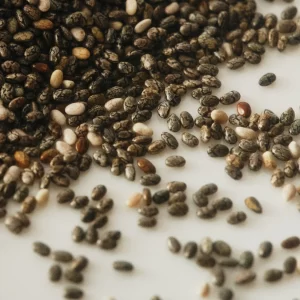
Chia seeds are back (again) — and nutritionists and doctors say there are good reasons for it.
Chia seeds are making a comeback — again.
They’re sprouting up on store shelves and packed into puddings and pretzels and even jams. According to forecasts from Grand View Research, a firm that tracks the food industry, the market for chia seeds is expected to grow by more than 22 percent per year between 2019 and 2025.
Such is the life cycle of the chia seed — always popping up in one trend or another. The seeds have long been a staple in Latin America, and were even offered to Aztec gods during religious ceremonies, but every generation in America seems to think they’ve discovered them for the first time, said Beth Czerwony, a registered dietitian with the Cleveland Clinic’s Center for Human Nutrition.
During the last 40 years, chia has maintained a fairly constant presence in the public consciousness. They appeared as the furry plant Chia Pets in the late 1970s, and by the ’90s, health food companies started marketing them as a nutritional powerhouse. Over the past decade in particular, the tiny seeds have garnered an outsized reputation: as a purported hack for weight loss, a protein supplement and a staple of the ultra-healthy.
“When it was trendy in the early 2000s, the kids talking about it now might not have even been born,” Ms. Czerwony said. “Everything old comes back.”
We asked nutritionists and doctors if the latest chia craze lives up to its healthy hype.
Are chia seeds really that good for you?
Chia seeds are not a magic conduit to weight loss or a cure for disease, but they are “incredibly healthy as a natural food source,” said Dr. Melinda Ring, an integrative medicine specialist at Northwestern Medicine.