You don’t have time to read it all. Make sure you read Stable Genus.
Keeping Homo Sapiens sane and informed in uncertain times. Nurturing the goodness that brings us together. Shining a light on the dark forces that threaten our democratic society.
With Artemis, NASA envisions a multiplanetary future for humanity
The Christian Science Monitor
Eva Botkin-Kowacki
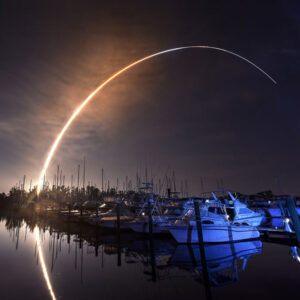
NASA’s quest to return humans to the moon has finally gotten off the ground. After being stymied by repairs and hurricanes, the Artemis 1 mission launched from Florida’s Cape Canaveral early Wednesday morning.
This first mission is an uncrewed test of NASA’s Space Launch System rocket and Orion spacecraft – shooting all the way to the moon and back – so that everything goes smoothly when humans do climb aboard for a trip to Earth’s companion.
But Artemis 1 is more than just a technological test. Success would signal momentum toward a broader vision for a multiplanetary future for humanity. Complete with construction of a permanent lunar outpost, the Artemis program is designed to establish a way station for travel to Mars – and beyond. Behind the audacity of that goal, shared by NASA and numerous private space companies, is a faith in the potential of human ingenuity.
A NASA launch Wednesday is designed to pave the way for humans to return to the lunar surface after a five-decade gap. The motivations go far beyond exploring the moon itself.
“The capabilities that we will develop for the Moon to Mars Program can and will enable a multiplanet species,” says Patrick Troutman, a NASA space architect for the agency’s Moon to Mars vision.
That future will be shaped by motivations – from security to exploration – that have already defined much of human experience on Earth, experts say.
Money will also be a factor. It’s not a question of whether we can land humans on Mars or establish a permanent outpost on the moon, says Roger Launius, former chief historian of NASA. “The question is, how much resources will it take? And do we want to expend [them] in that particular way?”
God, gold, and glory
One option now is for humans to skip the trip. Plenty of important science missions can be undertaken – more cheaply and with much less risk – using automated vehicles and instruments. But throughout our species’ history, humanity has expanded its footprint across landscapes, first filling spaces devoid of other humans and then jostling with other civilizations for the same places. To some, human spaceflight is a natural next step.